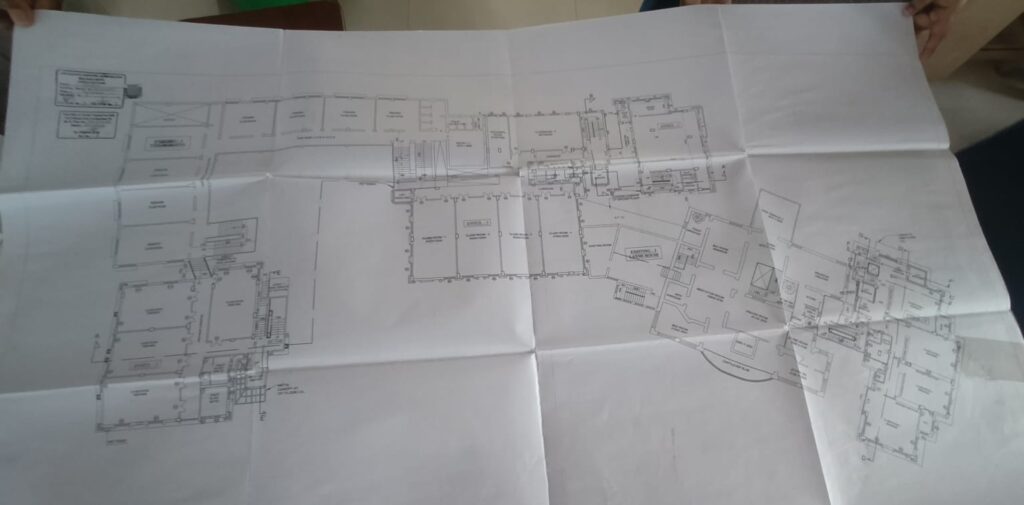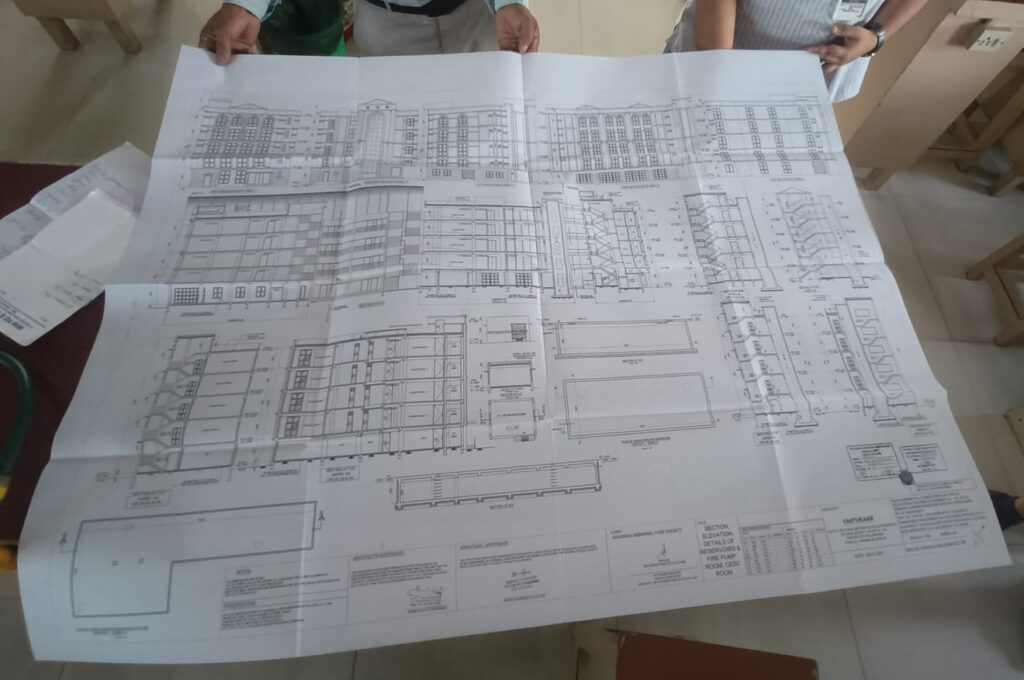
The Future Foundation School is unique in form and substance in more ways than one. Apart from the integrity of its education system, the very buildings that nurture this learning have acquired special significance through their distinctive nomenclature. This inspiring pattern of naming draws from the ethos of the Sri Aurobindo Ashram, Pondicherry.
Nestled in the verdant surroundings of 3, Regent Park stands Lakshmi’s House, named by The Mother in 1968 as the Home of Grace. It houses the Samadhi of Sri Aurobindo, as well as the meditation room—the spiritual anchor that guides the school. Known as Knowledge, it also accommodates the Institute Library.
Chronologically, the TFFS buildings began with the very first one, significantly named Faith. For it is in reposing our faith—not only in the ethos of the school, but also in ourselves—that we begin to learn as students and to facilitate learning as teachers. Within Faith lies our much-loved auditorium, fondly named the Hall of Light, inaugurated by Dyuman Bhai—known as “the luminous one”—an ardent devotee of Sri Aurobindo and former Chairman of the Sri Aurobindo Institute of Culture.
Quest, which came up next, continued this meaningful tradition of naming, reflecting the spirit of seeking that lies at the heart of true education. It houses the laboratories for Computer Studies, Physics, Chemistry, and Biology. It is in these labs that we question, experiment, rationalise, and arrive at understanding.
The Mother, Mirra Alfassa, was French, and French is taught in our school not only as a third language but also as a salient one. Students appear for the prestigious DELF examinations and often attain up to the B2 level of proficiency. Further, TTFS has had a long-standing association with Lycée Français de Pondichéry. This French connection found expression in the naming of the third building as Promesse, the French of Promise. TTFS promises excellence and continually strives to fulfil that promise.
It is especially significant that the fourth building was named Gratitude. The Divine has truly showered her blessings on the school, and each of us must learn to be grateful for all that the universe has bestowed upon us.
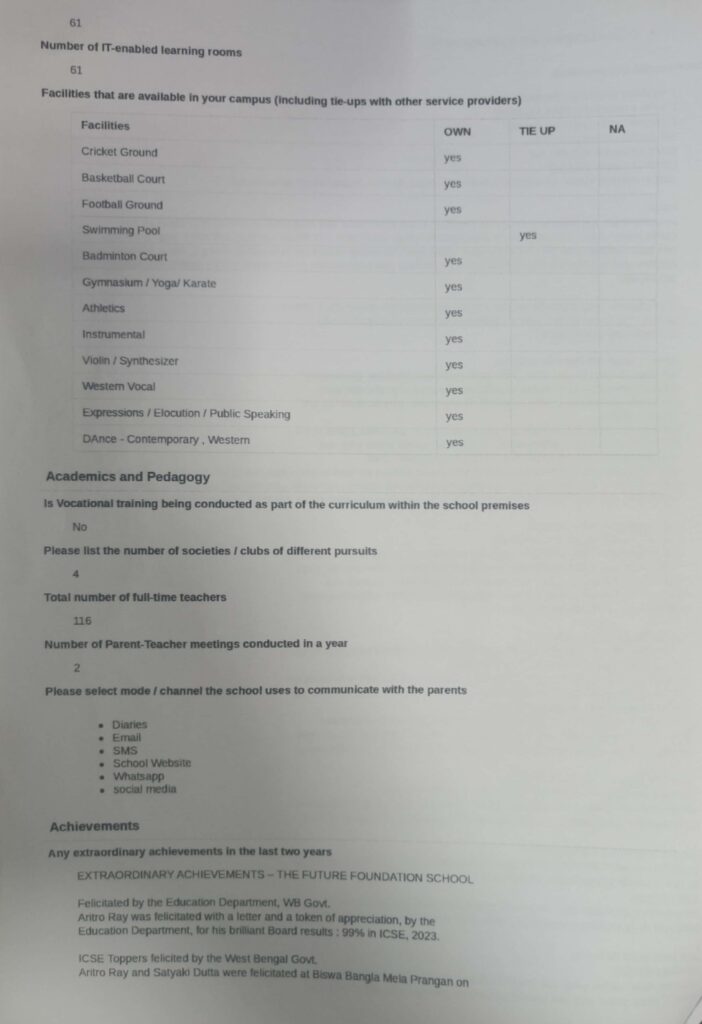
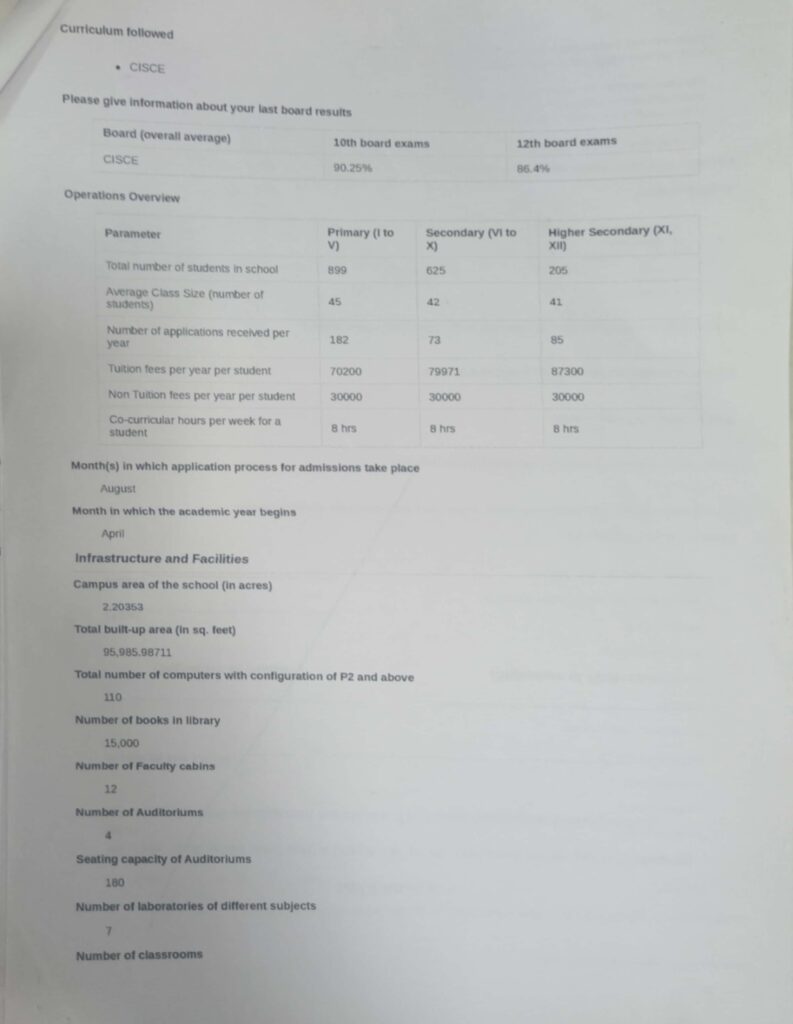
- Support staff 120
- Mainly two types of CCTV camera-Full HD 1080p HDCVI Camera and Full HD 1080p Internet Protocol Camera. Approximately 220+ cameras.
- Internet digital High speed secured Wi Fi facility available across school
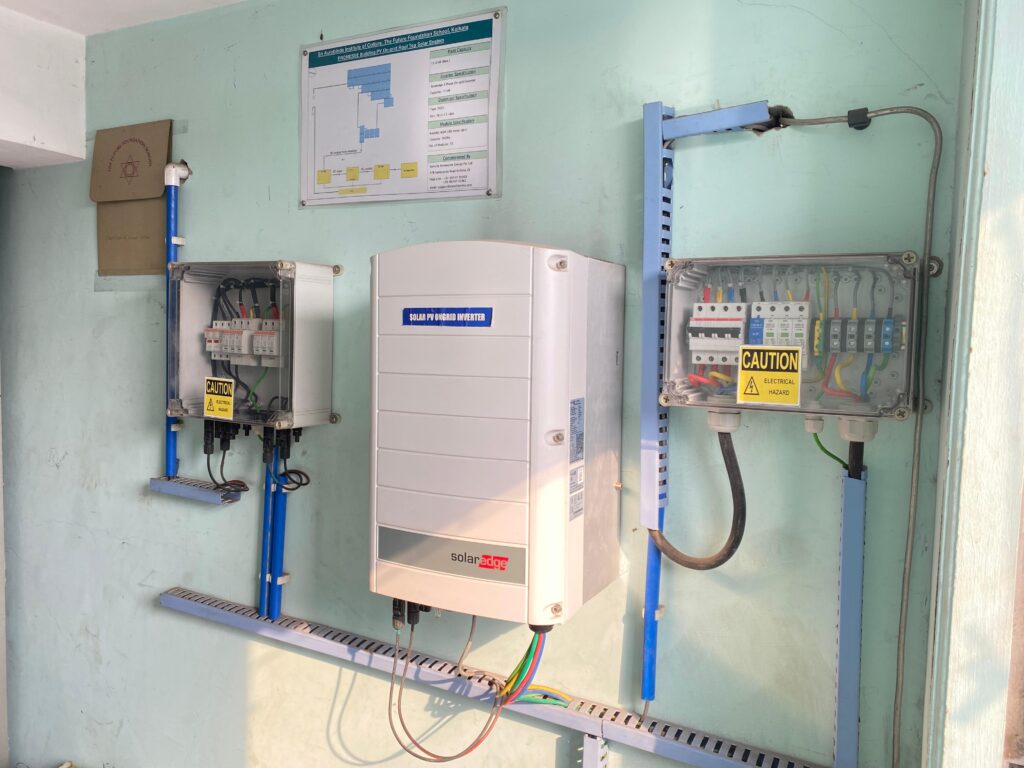
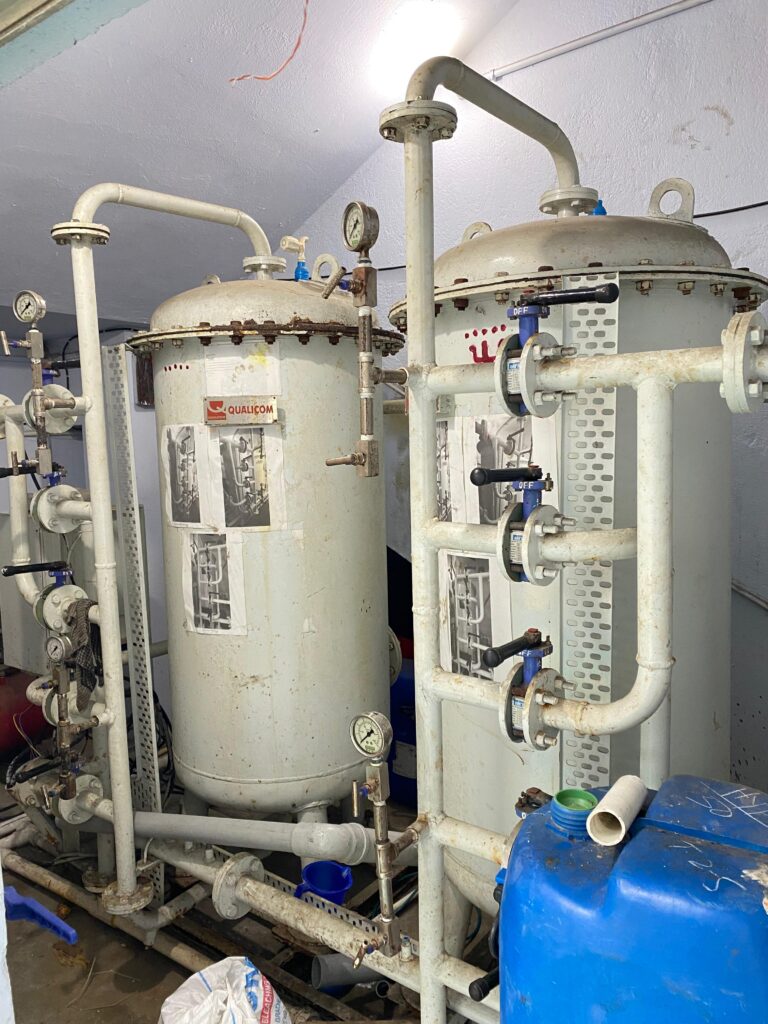
- We also have solar panels and STP and WTP which are sewage and drinking water treatment plants. High speed Wi-Fi facilities in every corner of the school.
- We have approximately 60 toilets spread across the school.
- Boys 14
- Girls 14
- Staff 30
Arrival and Dispersal
★ Classes I to IV
- Arrival is from 7.45 a.m. to 8.20 a.m.
- Dispersal is as per the timetable.
- School bus facility is available for arrival and dispersal.
- Dispersal is strictly against the Escort card.
- Dispersal for the students of Classes 1 and 2 is facilitated from the School gate; for Classes 3 and 4 from the Ashram gate.
- Dispersal for Classes 1 and 2 CSA Sports is as per the timetable.
- If there are any changes in timings for Annual Concert (Classes 1 and 2), Annual Sports (Classes 1 to 4), severe weather conditions and other important days of observance/events, that will be notified in due course.
★ Class V
- Arrival is from 7.45 a.m. to 8.20 a.m.
- Dispersal is as per the timetable.
- School bus facility is available for arrival and dispersal.
- Dispersal is strictly against the Escort card.
- Dispersal for the students of Class 5 is facilitated from the Ashram gate.
- If there are any changes in timings for Annual Sports, severe weather conditions and other important days of observance/events, that will be notified in due course.
★ Classes VI to VIII
- Arrival is from 7.45 a.m. to 8.20 a.m.
- Dispersal is as per the timetable.
- School bus facility is available for arrival and dispersal.
- ..Dispersal is facilitated from the school gate.
- If there are any changes in timings for Annual Sports, severe weather conditions and other important days of observance/events, that will be notified in due course.
★ Classes IX to XII
- Arrival is from 7.45 a.m. to 8.20 a.m.
- Dispersal is as per the timetable.
- School bus facility is available for arrival and dispersal.
- Dispersal is facilitated from the school gate.
- Changed timings for Annual Sports, severe weather conditions and other important days of observance/events will be notified in due course.
5.3 Mode of Dispersal
- Classes I to V: Escort Cards issued by the school to students will have to be shown to the teachers on duty at the gate during all dispersals.
- Classes VI and above: Guardians should wait at the school gate for their wards after school gives over.
Requests for early departure will not be entertained.
School Bus
The school does not own any vehicle for carrying students to and from the school. It has an outsourced arrangement under which students are provided bus services. The school is also involved to ensure better service and hence the students are encouraged to avail this facility as it provides added safety.
Parents/ guardians may avail of the bus services at their sole discretion. The school bus routes are available at the reception and on the website. Students availing the school bus services, must give prior intimation in writing in case he/ she does not avail the services on a particular day. Phone numbers: 9903434529, 8777685200, 9051706727.
School Uniform:
- Two sets of uniform & two pairs of black sport shoes must be maintained.
- Students should always come to school in the specified school uniform. They should wear PT uniforms on days they have PT classes.
- Students should buy their uniform from the designated tailor. Online order, online payment and home delivery facilities are available. Address: Smita Stores, Treasure Island Market, Shop nos 37 & 38, Ground Floor, 3 Madge Lane, Kolkata – 700016, Near Lindsay Street Raymond showroom between 11: 00 am to 8:30 pm.
Contact No.s Mr Sayandeep Mondal – 9874433002, Mr. Nirmalya Roy – 9051120089 & Mr. Shehzada – 9903465347
IP BOOKS
In the initial stages, the teachers create customised reading materials for the children so that the learning resources are not bound by the confines of text books and there is scope to explore different topics within a theme.
So.initially, the learning resources available to our students include customised reading materials, worksheets, activity kits/story books, educational field trip/s, excursions, etc. As the journey progresses, text books get added.
Children are introduced to the words and works of Sri Aurobindo and the Mother from the very early stages through the books prescribed for IDEALS AND PROGRESS . The following description will offer a glimpse into how this is done-
CLASS 1 – KIKI AND OTHER STORIES
This is a delightful little book of stories based on tales told by The Mother about her pet kitten. It is the perfect way to introduce the Mother to the children. They also learn invaluable lessons about resilience and perseverance through these stories.
CLASS 2 – A UNIQUE LITTLE GIRL
This book helps children understand ‘who was The Mother’ and give them a glimpse of her early life and subsequent arrival in Pondicherry.
CLASS 2 – IDEAL CHILD
This book contains the sayings of The Mother regarding ‘ who’ is an ideal child and what are the expectations of such a child in the class and on the playground and sets the standard that the children are expected to follow. This is a very important tool to guide the behaviour of the children .
CLASS 2 – ENFANT ID́EAL ( French version of the IDEALCHILD)
L’Enfant idéal, based on the teachings of The Mother, presents the qualities of an ideal child through simple yet profound lessons on patience, perseverance, courage, honesty, humility, generosity, and cheerfulness. It connects these values to daily life, school, sports, and relationships, encouraging fairness, teamwork, discipline, and respect for others.
It also introduces the idea of inner growth and evolution of consciousness, inspiring children to rise above limitations through truth, self-control, and a higher purpose. It helps nurture responsibility, resilience, optimism, kindness, and a strong moral character in young learners.
CLASS 3 – FLOWERS AND THEIR SPIRITUAL SIGNIFICANCE
Flowers and their Spiritual Significance is taught at the Grade 3 level. This book allows children, who naturally love flowers, to become aware of this bounty of nature in a deeper and more meaningful way. The Mother teaches us values through these flowers, and these values arise from the subtle vibrations that each flower carries.
CLASS 4 -THE VIRTUES -A TALE FOR YOUNG AND OLD by THE MOTHER
The Virtues is taught at the Grade 4 level. It is a beautiful progression from Flowers and Their Spiritual Significance. This book conveys its message through an enigmatic yet powerful story, guiding us to cultivate good qualities within ourselves. It introduces eleven such virtues, inspiring children to imbibe, nurture, and refine these qualities, helping them grow into good human beings.
CLASS 4 -Une drôle de petite fille
Une drôle de petite fille traces the early life and spiritual awakening of Mirra Alfassa, later known as The Mother. From childhood, she displayed remarkable qualities such as discipline, deep reflection, kindness, self-control, and an aspiration towards a higher purpose. Guided by her mother’s teachings, she learned to rise above trivial concerns and dedicate herself to work, study, and the pursuit of an ideal life.
As she grew older, her inner spiritual experiences deepened. Supported by her brother Matteo, she explored spiritual and occult studies through La Revue Cosmique and later travelled courageously to Tlemcen, Algeria, to meet Monsieur T. These experiences strengthened her spiritual consciousness and prepared her for her greater mission.
A turning point in her journey was her meeting with Sri Aurobindo in Pondicherry on 29 March 1914. The Mother immediately recognized him as the spiritual guide she had long seen in her inner visions as “Krishna.” Their meeting marked the beginning of a profound spiritual collaboration dedicated to the transformation of humanity.
The essence of the book lies in The Mother’s sincere search for truth and spiritual growth. It conveys values such as courage, perseverance, inner discipline, faith, and openness to higher ideals, while reminding readers that every child carries the potential for inner greatness and spiritual progress.
CLASS 5 – SRI AUROBINDO- THE STORY OF HIS LIFE
Sri Aurobindo: The Story of His Life is the textbook for Ideals and Progress in Class V. Sri Aurobindo’s life, especially his childhood, leaves a deep impression on students at such a tender age. They read about his devotion to studies, his lack of sentimentalism, and his extraordinary brilliance, despite the many obstacles he faced during his crucial growing-up years. His vast erudition and mastery over numerous foreign as well as Indian languages evoke a sense of awe and wonder in the children. It is a book that is as much a pleasure to teach as it is to study.
CLASS 6 – THE MOTHER- A SHORT BIOGRAPHY
The Mother: A Short Biography, prescribed for Class VI, traces the life of the remarkable child Mirra Alfassa. Gifted with extraordinary compassion and empathy, she would often enter deep states of meditation from as early as the age of four. Mirra shared a profound connection with nature—communing with birds and trees—and followed the path of truth even in her childhood.
The book is an engaging and enlightening read for young minds. It reveals how spirituality was a lived experience for Mirra, how she felt a deep inner pull towards Indian mysticism, and how this journey eventually led her to collaborate with Sri Aurobindo and spend the greater part of her life in Pondicherry.
CLASS 6 – Belles histoires
The book is a collection of short moral and spiritual stories told by The Mother. These stories aim to teach values such as kindness, courage, sincerity, self-discipline, faith, humility, and inner growth. Through simple stories and anecdotes from different cultures and traditions, the book encourages young learners to develop a noble character and a deeper understanding of life.
The Mother also highlights the idea of self-improvement, reminding readers that every individual has the ability to grow through sincere effort, positive thinking, and noble actions.
CLASS 7 – STORIES TOLD BY THE MOTHER-PART 1
Classes VII and VIII study Stories Told by The Mother, Part I. Each story in this collection is distinct in its origin and tone. Some are drawn from direct experiences, others from vicarious anecdotes, while still others are inspired by Indian mythology, Sufi mysticism, and diverse cultural traditions.
Without exception, every story conveys a valuable lesson, doing so subtly and almost imperceptibly. These narratives leave a deep impact on the students, prompting them to reflect, share, and engage in meaningful discussions, all the while imbibing profound truths.
CLASS 8- Vers indépendance
Vers l’indépendance is a collection of political and social writings by Sri Aurobindo, mainly written between 1909 and 1910 during India’s struggle for freedom. Through articles, speeches, and editorials, he encouraged the youth of Bengal and gave a new direction to the nationalist movement at a difficult time. The book also includes later writings that reflect his ideas on society, spirituality, and change. Some texts were originally published in newspapers such as the Dharma, Yugantar, and Karmayogin. The collection helps readers understand both Sri Aurobindo’s ideas on nationalism, society, and political change.
CLASS 11- SRI AUROBINDO For ALL AGES
The book helps the young students to know Sri Aurobindo a little more deeply and gives an insight on-
- his early life and education
- his return to India and his role in the Indian nationalist movement
- his spiritual transformation and his move to Pondicherry
- Integral Yoga and his collaboration with the Mother
- his final years
LIBRARY FACILITIES-
The children of Classes 1 and 2 have a class library and are encouraged to read books from the library in between classes or during breaks.
The library class in our school is quite unique. Apart from a wide range of books—fiction and non-fiction, as well as magazines—the library houses a Smart TV for watching films and documentaries and offers a number of games that visitors can enjoy.
A variety of engaging activities, such as making bookmarks, creating masks of favourite characters, and participating in language development exercises like reading aloud from books, speaking about one’s favourite book, and making character sketches, make the library classes especially enticing and enjoyable for students.
INTEGRAL EDUCATION
The Future Foundation School seeks to embody the vision of Integral Education as envisioned by Sri Aurobindo and The Mother—an education that nurtures not only the intellect, but the whole being. It recognizes that true learning unfolds when the physical, vital, mental, psychic, and spiritual dimensions of the child grow in harmony.
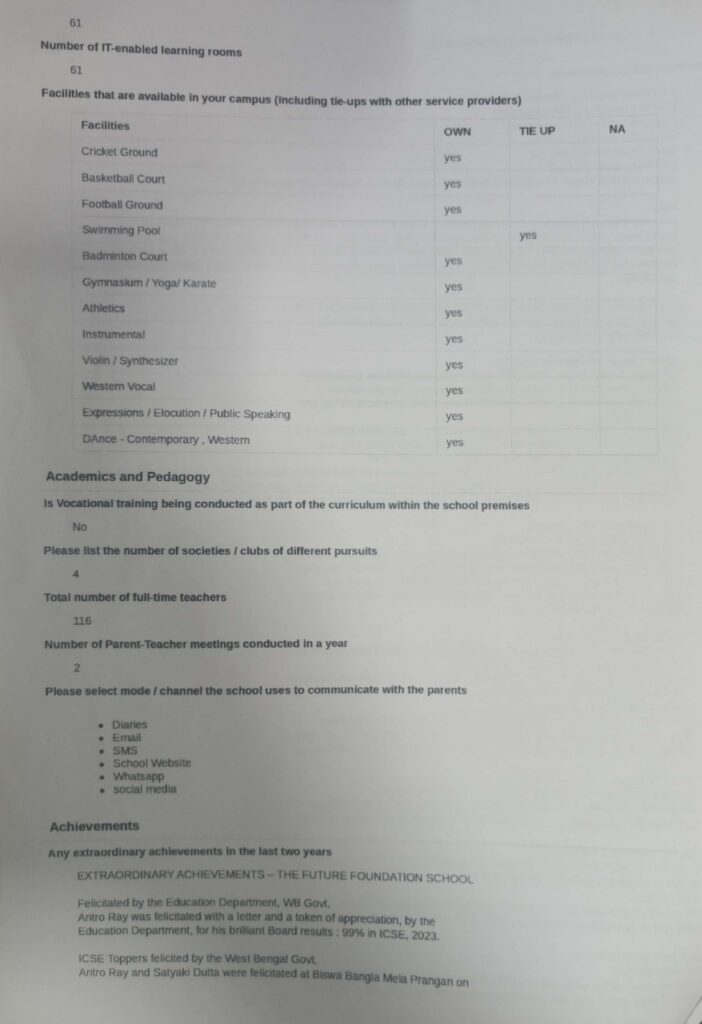
At the physical level, the school emphasizes strength, discipline, grace, and endurance. Through structured sports classes, Sports Day, participation in sports competition, engagement in various games like Kho kho, cricket, football, basketball, badminton, swimming and yoga, and attention to health and posture, students are guided to develop a body that is conscious, balanced, and capable—a strong foundation for all higher growth.
The vital aspect, which governs emotions, energy, enthusiasm, and will, is carefully shaped through a rich exposure to the arts, drama, music, collaborative activities, and leadership opportunities in clubs and various co-scholastic activities. Students learn to channel their energies positively, refine their emotions, build resilience, and develop qualities such as courage, perseverance, and empathy.
The mental development at The Future Foundation School goes beyond academic excellence. While a strong intellectual framework is built through rigorous and thoughtful teaching, equal emphasis is placed on clarity of thought, curiosity, independent thinking, and the ability to reflect deeply. Students are encouraged to question, explore, and arrive at understanding rather than merely accumulate information.
At the heart of Integral Education lies the psychic being—the inner soul. The school creates an atmosphere of quiet reflection, beauty, sincerity, and inner discovery, helping students connect with their deeper self. Through value-based interactions, meaningful assemblies and Special Assemblies, observation of special days, visits to the samadhi and moments of silence, children gradually become aware of their inner truth and develop a sense of purpose and authenticity.
Finally, the spiritual dimension is nurtured not through dogma or ritual, but through an atmosphere that encourages aspiration, harmony, and a sense of unity. Students are gently guided to feel a deeper connection with life, to rise above narrow divisions, and to experience values such as peace, gratitude, and universality.
In this way, The Future Foundation School does not see education as mere preparation for a career, but as a lifelong journey of self-discovery and growth. By harmonizing all parts of the being, it strives to help each child become a balanced, conscious, and awakened individual—capable not only of success, but of meaningful contribution to the world.